About Brown Safe

Estate Safe Buying Tips
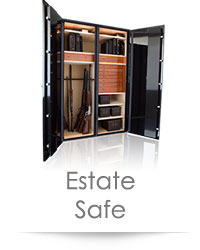
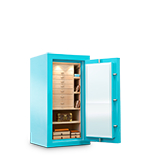
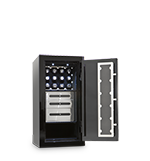
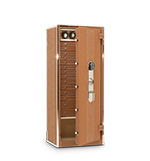
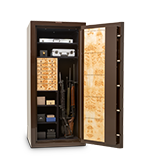
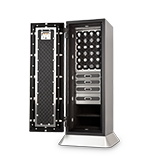
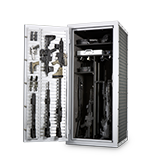
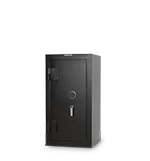
Estate safes are a Brown Safe exclusive. These are luxury grade safes in high capacity sizes. They are highly customizable and have a wide variety of sizes and interior layouts for the organization of jewelry, weapons, files, etc.

Click here for a direct link to our estate lineup.

Pros - Same great features as the luxury jewelry safes, but in larger sizes and with more layout options for a diverse range of collections.

Cons - Being larger safes, they are priced higher.
The size and weight of estate safes make them difficult to install in upstairs locations.

Estate Safe Specific Buying Tips:

  • Organize and optimize - A safe can do far more than simply protect your valuables. When properly configured, a safe provides a great opportunity to organize and optimize your life.
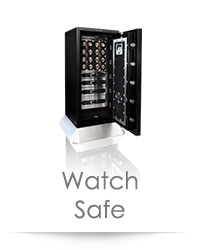
    To fully capitalize on what your new safe offers, it’s essential to stop thinking of your future safe as the thing you will store your valuables in and instead treat the safe as a highly configurable personal organizer…that protects what’s in it. A good safe can be equipped with file drawers, jewelry drawers, necklace racks, watch winders, DVD drawers, gun racks, photo drawers, equipment drawers…the list is very extensive.
    Rather than having your precious items spread throughout your home and loosing precious time tracking an item down whenever it goes missing, consolidate and organize. Take this opportunity to compile a list of the important items you commonly use and then consider how you want to organize these items in a way that works best for you. Now you can search out a quality safe that best accommodates your organizational plan.
  • Consider a second safe for quick access - Due to their weight and size, it can be difficult to install estate safes in locations that are conveniently accessible. Many homeowners in this situation find that owning two safes allows for convenient access to their daily use items while still having ample space for the important items used less often.
    By locating a second smaller Jewelry Safe in the bedroom or closet, commonly used items remain conveniently accessible and protected.

General Safe Buying Tips:

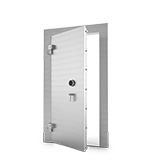
  • Check for a thick solid steel door and walls: It is essential that the safe you purchase has both a solid steel door and walls of substantial thickness. Without this base level of steel protection, any safe can be opened within minutes despite the hoopla of additional advertised protection features. While the majority of top selling safes on the market tout a plethora of protection features, virtually all fail miserably in this essential area.
    The safe you choose must have at minimum a ½” thick solid steel door and a ¼” thick solid steel body.
    Steel is very expensive and heavy, vastly increasing the safes build cost and the cost of shipping overseas to the reseller. As a result, nearly all oversea manufactured safes (and even many local built safes) cut these costs by making their safes with thin sheet metal wrapped around various forms of drywall to give the appearance of a robust safe. Click here to learn more.
    Be highly suspect if the safe manufacturer or reseller doesn’t state solid steel or lists "composite" for their wall or door material as this can be anything from sheet metal wrapped around wood to sheet metal and drywall.
    Also be on the lookout for safe sellers that list just ‘door thickness’ rather than the barrier material type and thickness as this is a recent trick many underhanded safe marketers employ. By listing the total thickness of the safe door including the safe dial, barrier material, airspace, inner bolt work, etc....  the provided figure can sound quite impressive while actually preventing the buyer from obtaining any solid information on how thick the barrier material actually is or what it's made of.
    Click here to learn more about the industry recognized protection rating systems.
    For details on the protection levels offered by Brown Safe... click here.
  • Judge a safe by its weight - Weight is one of the biggest factors when determining the base ability of a safe to protect from both burglary and fire.
  • Steel is heavy, a quality safe with solid steel walls will weigh substantially more than a flimsy safe fabricated by wrapping sheet metal around insulation panels.
  • High density concrete based amalgamate is heavy. A concrete amalgamate based composite fire safe will weigh substantially more than a safe that uses insulation panels.
  • Steel and high density concrete amalgamate together are really heavy. A true burglary safe with solid steel walls and concrete amalgamate fire cladding often carries three time the mass of an equivalent size safe constructed from sheet metal and drywall panels. These are the safes to look for.
  • If a safe is heavy, it doesn't necessarily mean the safe carries a lot of solid steel, the weight can come from the concrete amalgamate alone. To determine the amount of solid steel used by a safe, it's still best to learn the actual steel thickness for both the door and walls.
  • Stick with a UL approved lock - Always check that the safe you plan to purchase has a UL approved Group 2 lock or better. The three dependable lock manufacturers are LaGard, Sargent & Greenleaf, and Kaba Mas. These are the only lock manufacturers that produce locks guaranteed to provide decades of trouble free operation.
    If you decide on a safe without a UL approval, there's a 95% chance the safe's lock comes from China. The vast majority of safe manufacturers who equip their safes with "their own" lock brand also use Chinese locks. While highly affordable, Chinese built locks are highly undependable and are prone to early failure.
    We routinely receive calls from agonizing safe owners permanently locked out of their safe by a malfunctioning Chinese lock. Opening these safes is generally a very costly and time consuming ordeal as it's nearly impossible for even a licensed locksmith to obtain accurate blueprints to aid in a clean repairable entry into the safe. Most safe owners in this unfortunate position opt for the faster and less expensive forced entry option. The safe is rendered unusable after a forced entry and the owner is stuck with a hefty bill and in the market for a reliable and secure safe... many current clients sought out our company after experiencing one or more highly unpleasant lockouts with inferior safes.
    To view details on our UL approved electronic keypad lock, click here.
    Click here to view info on our combination dial lock.
    To view our biometric lock... click here.
  • Avoid fireboard or drywall based fire safes: Although fire safes constructed with fireboard, drywall, fiberboard, or other panel based insulation materials make up the majority of safes sold today, they provide inferior fire protection when compared to true composite fire safes or composite clad fire safes.
    More importantly, these panel based safes provide fire protection at the cost of highly reduced burglary protection. The majority of fireboard style safes provide little to no burglary protection. Click here to learn why.
  • Consider entry convenience: A safe that is slow to open or access is a safe you are less likely to use. Adding an electronic lock can make opening the safe quick and easy, as well as enabling the user to reset the combination when needed without the aid of a locksmith or combination kit. For the ultimate in user convenience and security, a high grade biometric lock can't be beat.
    Click here to see our electronic lock offering.
    To view our biometric lock... click here.
  • Check for re-lockers: All quality safes should have re-lockers to help ensure the safe remains locked in the case of a burglary. Re-lockers are hardened pins that are triggered, in a variety of ways during an attack, and cannot be retracted without hours of drilling. The number of re-lockers on a safe will range from 2-10+ depending on the size and burglary grade of the safe.
    Bear in mind, re-locker pins only prove useful when the safe has a substantially thick steel door and walls. Most safes today are equipped with two or more re-locker pins. But on a steel deficient safe, these pins along with the locking bolts simply tear or bend right through the safe's thin door jamb by prying on the safe door with nothing more than a common crowbar.
    Click here to learn more about our glass plate re-locker system.
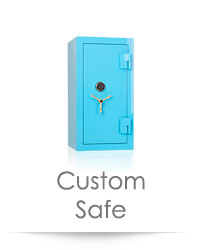
  • Consider a custom safe: Does the size of your chosen safe make best use of the space it's occupying? Is the interior layout of the safe well suited to your needs? In many cases there's room for improvement and this is where a custom safe is worth consideration. Brown Safe is one the only safe manufactures in the world to offer fully customizable safes. Custom sizes, finishes, and interiors are available at a very reasonable price point. We can work with you and/or your interior designer, architect, and carpenter to ensure a quality safe built to your exact specifications.
    To see a few example custom safes...click here.